Somewhere around the third week of September, a switch flips. Pumpkin displays show up outside the grocery store, a string of orange lights appears on a neighbor’s porch, and your group chat starts asking the same question it asks every year: “Are we doing something for Halloween this time?”
If you’re the one who ends up answering that question — the one who becomes the unofficial host — this guide is for you. Not a list of costume puns or forty ways to say “Happy Halloween” (we’ve already written those: check out our 100 Halloween messages for friends and our complete guide to Halloween wishes if that’s what you’re after). This is the other half of Halloween: actually planning the night. The theme, the decor, the food, the games, the budget, the safety details nobody thinks about until 9 p.m., and — because distance shouldn’t mean someone gets left out of the fun — a few creative ways to loop in the people who can’t be there in the room with you.
Let’s build the party — from the first decision down to the details nobody remembers to plan for until it’s too late.
What’s Inside This Guide
- The Halloween Party Planning Timeline
- 18 Halloween Party Themes (For Every Kind of Host)
- Costume Strategy: Solo, Couple & Group
- Decorating on Any Budget, Room by Room
- Food & Drinks That Actually Get Eaten
- Games & Entertainment for Every Age Group
- Building the Perfect Halloween Playlist
- Including People Who Can’t Be There in Person
- 5 Halloween Hosting Mistakes to Avoid
- Halloween Party Budgeting: Where to Spend, Where to Save
- Halloween Safety Checklist
- The Complete Halloween Party Checklist
- Frequently Asked Questions
The Halloween Party Planning Timeline
Most Halloween parties don’t fail because the host lacked good ideas. They fail because good ideas got decided on October 29th, when the good pumpkins were gone and the costume shop was out of everything except one adult-sized banana suit. Work backward from the date instead.
4–6 Weeks Before: Lock the Big Decisions
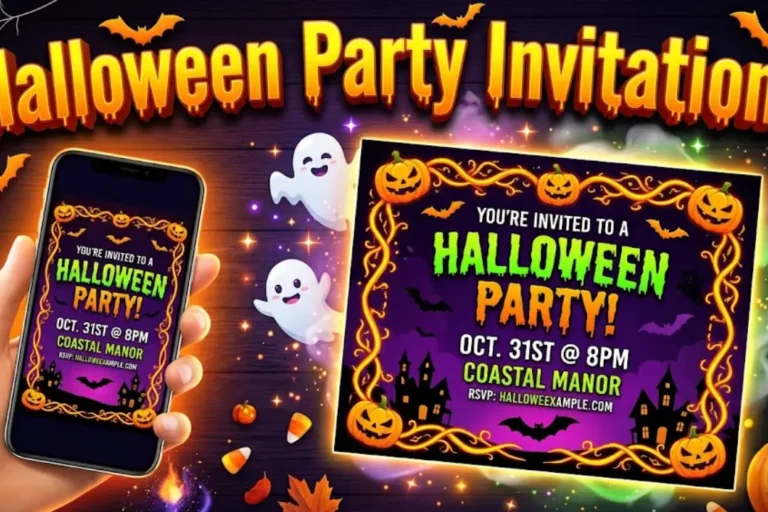
Pick the date first — in 2026, Halloween (October 31st) falls on a Saturday, which makes scheduling ideal. If you’re hosting an evening party, Saturday night is perfect, though you may want to set your start time after neighborhood trick-or-treating finishes.A quick AR video invitation takes minutes to record and instantly feels more exciting than a group text; our guide to digital invitations covers wording and delivery timing that applies just as well to a Halloween party as it does to a birthday.
2–3 Weeks Before: Theme, Decor Orders & the Menu
This is when you commit to a theme (more on that below), order anything that ships slowly, and finalize the menu so you’re not improvising snacks the morning of. If you’re renting anything — a fog machine, extra chairs, a projector for a movie corner — this is the week to book it, since Halloween weekend is peak demand for party rental companies.
1 Week Before: Shopping & Prep
Buy non-perishable decor and dry goods. Confirm your final headcount so you’re not guessing on drinks and candy. If you’re carving pumpkins, buy them now but carve closer to the date — a carved pumpkin left out for a week starts to sag and mold faster than most people expect.
1–2 Days Before: Assembly
Decorate everything that doesn’t need to be fresh — string lights, wall decor, tablecloths, signage. Prep any make-ahead food (dips, baked goods, batch cocktails or mocktails). Charge your speaker, test your playlist, and do a walk-through of the space in the dark to see how your lighting actually reads at night, not just under daylight.
Day Of
Carve pumpkins if you saved that step, set out perishable food last, and give yourself a real buffer — thirty minutes of “just in case” time before guests arrive is the difference between greeting people relaxed and greeting them mid-panic with a glue gun in your hand.
18 Halloween Party Themes (For Every Kind of Host)
A theme isn’t decoration for decoration’s sake — it’s what makes decisions easier. Once you pick one, half your shopping list, your playlist, and even your food choices fall into place on their own. Here are eighteen that work for different group sizes, budgets, and vibes.
Classic & Spooky
- Haunted Mansion: Cobwebs, dim amber lighting, portrait walls with “eyes that follow you,” and a creaking-door sound loop playing softly in the background.
- Graveyard Garden: Foam tombstones with punny epitaphs, dry-ice fog rolling across the floor, and a “buried treasure” candy dig for kids.
- Witch’s Coven: Cauldrons with dry-ice punch, herb bundles, mismatched candlesticks, and a “potion bar” where guests mix their own mocktails.
- Vampire’s Ball: Black and deep red palette, formal dress code, candelabras, and a “blood orange” signature drink.
Playful & Colorful
- Neon Nightmare: Blacklight decor, glow paint, neon accessories — everything pops the second the lights go down.
- Candy Land Gone Wrong: Oversized candy props with a slightly eerie twist — think melting gummy bears and cracked lollipops.
- Pastel Pumpkin Patch: Soft creams, sage, and blush instead of the usual black and orange — popular for daytime or family-friendly parties.
- Circus of the Cursed: Striped tents, popcorn stations, and a ringmaster dress code with a haunted twist.
Decades & Retro
- 80s Horror Movie Night: Neon and denim costumes, a projector loop of retro horror trailers, and a snack table styled like an old video store.
- Studio 13: A Halloween spin on a disco theme — sequins, a mirrorball, and a “monster mash” dance floor.
- Victorian Gothic: Lace, dark florals, and old-fashioned parlor games for a slower, more atmospheric evening.
Interactive & Story-Driven
- Murder Mystery Dinner: Assign characters ahead of time and let the “who-dunnit” carry the whole evening. Works especially well for smaller, adult-only groups.
- Escape the Haunted House: Set up two or three simple puzzle stations around your home that guests solve in teams before “escaping” to the dessert table.
- Trick-or-Treat Trail: For a backyard or block party — guests move between decorated stations, each with a different snack, activity, or photo moment.
Kid- and Family-Friendly
- Not-So-Spooky Carnival: Face painting, a bean-bag toss shaped like pumpkins, and low-key games with candy prizes.
- Storybook Halloween: Guests come dressed as characters from favorite books, with a reading corner and a costume parade.
- Mad Scientist Lab: Glow-in-the-dark slime stations, dry-ice “potions,” and lab-coat costumes — a hit with elementary-age kids.
- Barnyard Boo: Hay bales, pumpkin patch photo corner, and cider — a gentle, outdoor-friendly option for younger guests and grandparents alike.
Whichever theme you land on, write it into the invitation itself, not just the group chat caption. A themed AR invitation — where you appear on your guest’s phone dressed for the occasion, announcing the theme out loud — sets expectations far better than a text ever does, and it means fewer people show up in the wrong costume energy entirely.
Costume Strategy: Solo, Couple & Group
You don’t need a costume guide to know Halloween needs a costume — but a little strategy saves a lot of last-minute stress.
If you’re going solo: Pick something you can build from pieces you already own plus two or three cheap additions. A single strong prop (a lantern, a mask, an oversized hat) does more visual work than an entire matching outfit bought new.
If you’re going as a couple: Choose a pairing where each half still looks complete on its own — that way neither person is stranded if you get separated at a party. Classic duo pairings (a hero and their sidekick, two halves of a well-known pairing, a “before and after” concept) photograph better than costumes that only make sense standing next to each other.
If you’re coordinating a group: Agree on a color palette rather than identical outfits — it reads as intentional in photos without forcing six people into the exact same store-bought costume. Set a “reveal” moment where the group walks in together; it’s a small thing, but it becomes the photo everyone reposts.
For hosts specifically: Pick a costume you can actually move, cook, and clean in. The most elaborate costume in the room is a problem if you can’t bend down to plug in string lights or carry a tray without knocking your own headpiece off.
And if someone in your circle can’t make it to the party but still wants to be part of the costume moment, a quick AR video of them “arriving” in costume — sent to the group chat and played on a screen at the party — is a genuinely fun way to keep them in the group photo, even from a different city.
Decorating on Any Budget, Room by Room
Good Halloween decor isn’t about how much you buy — it’s about controlling three things: lighting, texture, and one strong focal point per room.
Entryway
This is the first impression, so it earns the most effort per square foot. A single well-lit pumpkin display, a doormat, and a warm porch light swapped for orange or amber does more than a yard full of scattered inflatables. If you’re handing out candy, keep a clear, well-lit path to your door — it’s the single biggest safety upgrade you can make for trick-or-treaters.
Living Room / Main Gathering Space
Layer your lighting: turn off the overhead light entirely and rely on string lights, lanterns, and flameless candles instead. Dim, warm light does more for “spooky atmosphere” than any prop you can buy. Add texture with cheesecloth or thin fabric draped over furniture edges, artificial cobwebs stretched (not clumped) across corners, and one dramatic centerpiece — a tall candelabra, an oversized spider, or a fog machine running low and slow near the floor.
Kitchen / Food Table
Keep this area brighter than the rest of the party so guests can actually see what they’re eating and serving themselves. A black tablecloth with orange or white accents, labeled food cards with punny names, and a few small pumpkins as risers under bowls goes a long way without cluttering the actual food.
Bathroom
The most overlooked room and the easiest one to make memorable. A “bloody” hand towel, a spooky playlist on a small speaker, or a fogged mirror decal turns a thirty-second detour into a mini photo op.
Outdoor Space
If you have a yard or patio, this is where scale matters most — a few large silhouettes (bats, a witch on a broom, tall “graveyard” stakes) read better from a distance than dozens of small items. Battery-operated lights are worth the investment outdoors, since you’re not fighting extension cords across wet grass.
Budget rule of thumb: spend on lighting first, texture second, and single-use novelty props last. Lighting and fabric get reused every year; a plastic skeleton that only works for one theme usually doesn’t.
Food & Drinks That Actually Get Eaten
Themed food is fun, but overly complicated Halloween food is where a lot of host energy goes to die. Aim for two or three genuinely “wow” items and let everything else be simple, familiar food with a spooky name or garnish.
Savory
- Mummy-wrapped hot dogs or breadsticks (crescent dough strips, baked)
- A “graveyard” dip platter — hummus or spinach dip with tortilla chip “tombstones” pushed into the surface
- Jack-o’-lantern stuffed peppers (orange bell peppers with a carved face, filled with rice or a savory mix)
- A cheese board arranged into a spiderweb pattern using a simple sour cream drizzle
Sweet
- Meringue “ghosts” piped onto a baking sheet
- Chocolate-dipped pretzel “witch brooms”
- A simple pumpkin spice or spiced apple cake — reliable, crowd-pleasing, and easy to make ahead
- A candy bar buffet organized by color rather than brand, so it photographs well
Drinks
Batch one signature drink instead of running a full bar — it’s faster to serve and it becomes part of the theme. A dry-ice “witch’s brew” punch (non-alcoholic, kid-safe if you skip the dry ice near younger guests, or use it purely for the fog effect in a separate bowl) is one of the most requested effects at any Halloween party for a reason: it’s dramatic, cheap, and easy to prep in advance. Always keep a clearly labeled non-alcoholic option next to the signature cocktail so kids, designated drivers, and non-drinkers aren’t left out.
Dietary Considerations
Label anything with common allergens (nuts, gluten, dairy) clearly on small cards, and try to have at least one vegan or vegetarian savory option and one nut-free sweet option on the table. It’s a small effort that means every guest actually gets to eat, not just look.
Games & Entertainment for Every Age Group
The best Halloween party games share one trait: low setup, high payoff. Here’s a mix organized by group type.
Works for Everyone
- Costume Contest: Set two or three categories (scariest, funniest, most creative) instead of one overall winner — it spreads recognition and keeps more people invested.
- Pumpkin Decorating Station: Paint instead of carving for a mess-free, all-ages option. Set a timer for a “reveal round” at the end.
- Halloween Trivia: Mix horror movie trivia, Halloween history, and local/inside-joke questions about your group so both film buffs and casual guests can win.
Kid-Friendly
- Bobbing for apples (or a mess-free version using a ring toss over floating apples)
- A candy scavenger hunt with clues hidden around the house or yard
- “Pin the Wart on the Witch” — a Halloween spin on the classic party game
- A mummy-wrap relay using rolls of toilet paper and a stopwatch
If you’re hosting a mixed group of kids and adults, keep the games in short, clear rounds with a prize for every category — it keeps the energy up without any one group getting bored or checking out. Our baby shower games guide has a few more round formats you can borrow and reuse for a Halloween crowd.
Adults-Only
- Murder mystery dinner (pre-scripted kits are widely available and require minimal setup)
- Horror movie trivia with a drinking-game twist (non-alcoholic version: candy corn instead of drinks)
- “Two Truths and a Ghost Story” — an icebreaker where each guest tells two true and one invented spooky personal story for the group to guess
Passive Entertainment
Not every party needs structured games. A horror movie playing quietly in one corner, a curated Spotify playlist that shifts from playful to eerie as the night goes on, or a photo booth corner with props and good lighting gives guests something to drift toward without forcing participation.
Building the Perfect Halloween Playlist
A Halloween party lives or dies a little on its sound. Silence in a decorated room feels flat, but the wrong music — too aggressive, too literal, too much “Monster Mash” on repeat — pulls people out of the atmosphere instead of into it. Think of your playlist in three acts.
Act One: Arrival (First Hour)
Keep this playful and mid-tempo. Guests are still arriving, taking photos, and finding their footing — the music should be background energy, not a demand for attention. Fun, slightly spooky, easy to talk over.
Act Two: Peak Party (Middle Hours)
This is where you can lean into higher-energy tracks, including a few genuinely danceable songs mixed in with the Halloween staples. If you’re running a costume contest or game round during this window, cue a distinct “announcement” track so people instinctively know something’s about to happen.
Act Three: Wind-Down (Final Hour)
Slower, moodier, more atmospheric — this is the window for ambient horror soundscapes, slow-building tracks, or a quiet playlist that gives late-night conversations room to breathe instead of competing with them.
One practical tip: build your playlist at least three days before the party and actually listen through it once, start to finish, at party volume. Song transitions that sound fine at low volume on headphones can feel jarring blasted through a speaker in a room full of people — and it’s much easier to fix that on a Tuesday afternoon than mid-party on Saturday night.
Including People Who Can’t Be There in Person
Every Halloween party has a version of this problem: the friend who moved cities, the grandparent who can’t manage stairs anymore, the sibling on a work trip, the college friend group scattered across three time zones. The instinct is usually to just send a few photos the next day — but that turns them into a spectator of your party instead of a part of it.
A few ways to genuinely close that gap:
Before the Party: Send a Real Invitation, Not Just a Text
A text invite is easy to skim and forget. A short, personal video invitation — recorded in costume, hyped up, specific about the theme — gets remembered. If you use MessageAR, that invitation can appear as an augmented reality greeting right in your friend’s space when they open the link, which makes even a simple “hey, wish you could be here” moment feel like an event instead of a notification. It’s a small upgrade from a group chat message, but it’s the difference between someone glancing at their phone and someone actually feeling included from the start.
During the Party: Bring Them In, Briefly
You don’t need a full video call running in the background all night — that gets awkward fast. Instead, pick one moment (the costume contest, the pumpkin reveal, midnight toast) and loop in your long-distance guest for just that part, live on a phone or laptop propped up where they can see the room.
After the Party: Send the Moment, Not Just the Photos
This is the part most hosts skip. A quick, personal “wish you were here” video — recorded the next morning, still slightly hungover from decorating — means more than a photo dump in the group chat. If your friend group loves keeping the Halloween spirit going a little longer, our Halloween wishes guide has ready-to-use lines you can read straight into a quick video message, and our 100 Halloween messages roundup has options for every kind of friendship, from the genuinely sentimental to the deliberately unhinged.
For Couples Celebrating Long-Distance
If Halloween falls during a stretch when you and a partner can’t be in the same city, don’t default to skipping it. Turn it into a themed long-distance date night instead — matching costumes over video call, a synchronized horror movie watch, or a spooky-themed version of the ideas in our 725 date night ideas guide, several of which adapt easily to a Halloween theme with almost no extra effort.
Hosting an All-Virtual Halloween Party
Sometimes the whole group is scattered and an in-person party isn’t realistic at all — a friend group that met in college and now lives across four cities, a family spread across countries, a work team that wants something festive without organizing travel. A fully virtual Halloween party can still work, as long as you treat it like an actual event and not just “a video call, but spookier.”
Set a start and end time, same as you would for any party — open-ended calls tend to fizzle within twenty minutes. Send everyone the same simple prompt ahead of time (a costume color, a prop, a background) so the video grid has visual consistency instead of looking like six random rooms. Structure the call loosely around two or three moments — a costume reveal round, a quick trivia game played over chat, a synchronized countdown to a shared toast — rather than leaving the whole call unstructured. And build in a few one-on-one touches around the edges: a personal AR greeting sent before the call starts, or a short recorded message afterward for anyone whose time zone meant they couldn’t join live, keeps the event from feeling like it only counted for the people who happened to be free at exactly the right hour.
None of this needs to be elaborate. The goal isn’t to recreate the whole party for someone who’s far away — it’s to make sure they’re not just told about the moment afterward, but actually handed a piece of it.
5 Halloween Hosting Mistakes to Avoid
1. Decorating Only for Daylight
Decor that looks great at 4 p.m. can look completely different — or barely visible — once the sun goes down and your only light source is a few string lights. Always do a final walk-through after dark before guests arrive, and adjust lighting rather than adding more decor if something isn’t reading the way you pictured it.
2. Over-Planning the Menu, Under-Planning the Quantity
Six elaborate themed dishes in small portions tends to run out faster and create more kitchen stress than three simple dishes made in generous quantity. Guests remember not running out of food far more than they remember how many themed dishes there were.
3. Forgetting the Non-Costume Guests
Not everyone wants to dress up, and a party that visibly treats non-costumed guests as less “committed” makes people self-conscious. A simple accessory table by the door — masks, headbands, face paint — gives low-effort guests an easy way to opt in without pressure.
4. No Plan for the Lull
Every party has a quiet stretch, usually about ninety minutes in, after the initial excitement settles and before the energy naturally picks back up. Having one planned activity — a game round, a costume contest, a group photo moment — ready to launch right at that point keeps the party from stalling out.
5. Treating Long-Distance Guests as an Afterthought
It’s easy to plan the entire party around the people physically in the room and only think about absent friends the next morning, if at all. Building one small moment for them — an invitation sent ahead of time, a live minute during the party, a personal thank-you after — takes very little effort and makes a noticeably bigger difference to the relationship than most hosts expect.
Halloween Party Budgeting: Where to Spend, Where to Save
You can throw a memorable Halloween party at almost any budget if you’re deliberate about where the money goes.
Spend Here
- Lighting. It transforms a space more than anything else and gets reused every year.
- One statement centerpiece per room — a large prop or an elaborate food display — rather than many small items.
- Food quantity over food complexity. Guests remember not running out; they rarely remember whether the dip was homemade.
Save Here
- Individual costumes. Thrift stores, costume swaps, and items you already own go further than new purchases.
- Small decor pieces. DIY paper bats, hand-cut spiderwebs, and printed “tombstone” signs cost almost nothing and photograph just as well as store-bought versions in dim lighting.
- Invitations and thank-yous. A recorded video message costs nothing but a few minutes and reads as far more thoughtful than a paid printed invite.
Split the Cost, Without the Awkwardness
If you’re hosting a larger group, a simple potluck structure (you handle decor and the main dish, guests each bring one category — drinks, sides, or dessert) keeps costs reasonable without anyone feeling like they’re being asked to “pay” for a party. Assign categories early so you don’t end up with six bags of chips and no dessert.
Halloween Safety Checklist
The fun of Halloween decor comes from fog, candlelight, and dim lighting — all three of which need a little extra care when you’re also hosting a crowd.
- Skip open flames where possible. Battery-operated LED tea lights and flicker candles give the same glow inside pumpkins, lanterns, and windows without the fire risk, and they’re safe to leave burning unattended around costumes and kids.
- Keep walkways genuinely walkable. Cords, fog machine tubing, and low decor should never cross a path where guests — especially anyone in a bulky costume with limited visibility — are walking.
- Light your entryway and stairs. Atmosphere is for the party rooms, not the stairs. Keep entry points, stairwells, and bathrooms brightly and clearly lit.
- Check costume visibility if trick-or-treating is involved. Reflective tape on bags or costumes, and a flashlight or glow stick per child, matters far more than it seems like it should once the sun goes down.
- Inspect candy before kids eat it. Standard advice, still worth repeating: check for damaged wrappers and keep young kids’ candy separate until a parent has looked through it.
- Ventilate fog machines. A little fog goes a long way in an enclosed room — crack a window or door rather than filling a small space completely.
- Have a clear “kids zone” if your party mixes ages. A room or corner without alcohol, breakable decor, or anything sharp gives younger guests somewhere safe to be while adults are elsewhere.
- Plan for allergies. Label food, and if pets are around, keep chocolate and xylitol-containing candy well out of reach.
The Complete Halloween Party Checklist
4–6 Weeks Out
- Set the date and guest list
- Choose the theme
- Send save-the-dates or invitations
- Book any rentals
2–3 Weeks Out
- Order decor and costume pieces
- Plan the menu and drink list
- Assign potluck categories if applicable
- Plan games and entertainment
1 Week Out
- Buy non-perishable decor and dry goods
- Confirm final headcount
- Buy pumpkins (carve closer to the date)
- Prep any make-ahead food
1–2 Days Out
- Decorate the space
- Test lighting after dark
- Charge speakers, test the playlist
- Carve pumpkins
Day Of
- Set out perishable food last
- Do a safety walk-through (cords, candles, lighting)
- Send any long-distance guests their AR invite or video call link
- Build in thirty minutes of buffer time before guests arrive
Day After
- Send thank-you messages, including a quick video for anyone who couldn’t make it
- Take stock of what worked for next year’s notes
Frequently Asked Questions
How far in advance should I start planning a Halloween party?
Start four to six weeks out for the big decisions — date, guest list, theme, and venue. Decor, costumes, and food details can comfortably wait until one to two weeks before the party.
What is a good budget-friendly Halloween party theme?
A single-color theme (all black and orange, or an all-white “ghost” palette) or a decades theme built around a costume box you already own tends to cost the least, since most of the visual impact comes from lighting and one or two statement props rather than dozens of purchased items.
How do I include friends or family who can’t attend in person?
Send a short AR video invitation or greeting through a tool like MessageAR so they can experience a piece of the moment from wherever they are, loop them into one live moment during the party, and follow up with a personalized thank-you video afterward instead of just a photo dump.
What are safe alternatives to open flame candles for Halloween decor?
Battery-operated LED tea lights and flameless flicker candles give the same warm glow inside pumpkins, lanterns, and windows without the fire risk, and they’re safe to leave running unattended around costumes, decorations, and kids.
What games work for a mixed group of kids and adults?
Costume contests, pumpkin decorating stations, and Halloween trivia work well across age groups because everyone can participate at their own level, unlike games that require reading fluency, alcohol, or heavy physical activity that ends up excluding younger or older guests.
Should I send physical or digital Halloween invitations?
Digital invitations work better for most modern Halloween parties simply because they’re faster to send, easier to update if plans change, and let you include richer detail — a theme reminder, a costume prompt, even a short video — without the lead time or cost of printing. Physical invitations still have a place for smaller, more formal gatherings, but for a group text or Halloween party where speed and reach matter, a well-designed digital invite (including a quick AR video announcement) usually gets a faster, more enthusiastic response.
Making the Night Actually Memorable
The parties people talk about a year later are rarely the ones with the biggest budget. They’re the ones where the host paid attention to the details that make people feel looked after — good lighting, food that doesn’t run out, a game that gets even the shy cousin involved, and nobody left wondering why they weren’t invited just because they live three states away.
That last part is easier to solve than most hosts think. A thirty-second AR video invitation or a personal thank-you message afterward, sent through MessageAR, takes almost no extra effort and turns “sorry you couldn’t make it” into something your long-distance friends actually get to be part of. Pair that with the theme, decor, and food ideas above, and you’ve got everything you need to host the Halloween party your group actually remembers — not just the one everyone means to plan next year and never quite pulls off.
Happy haunting. 🎃